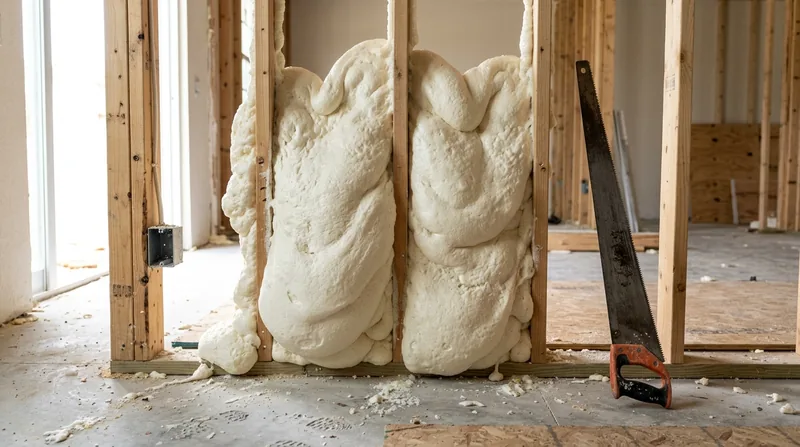




Open Cell Spray Foam Insulation in Miami is the cost-effective way to seal attics and interior walls where moisture and heat drive up cooling bills year-round. Miami's concrete-block ranches, low wood-truss attics, and 1920s Mediterranean Revival homes all face the same problem: hot air leaks in through gaps around ductwork, electrical chases, and rim joists, while the AC runs constantly to compensate. Half-pound open-cell foam air-seals these gaps at a friendlier price per board foot than closed-cell, and it doubles as sound dampening between bedrooms and between townhome units. We spray it at the right thickness, with proper ventilation during cure, and we tell you plainly when closed-cell is what you actually need. Since 2012, we have worked across Greater Miami from Miami Beach to Homestead, and we know the local building code, the humidity challenges, and which jobs get permits and which do not.
Why Open-Cell Foam Matters in Miami's Tropical Heat and High Humidity
Miami sits barely above sea level on a limestone ridge, and almost every home is built on a concrete slab with no basement or crawl space. The wood-truss attic above carries the AC air handler and ductwork that run 140 to 160 degrees Fahrenheit most of the year. When air leaks out of those ducts and into the unconditioned attic, that cooled air is simply lost, and your compressor works overtime. Open-cell foam stops that leak at the source, sealing gaps that fiberglass batts and blown-in cellulose cannot reach. The tropical climate means vapor drive pushes inward constantly, and open-cell foam is vapor-permeable, which means it lets moisture move through rather than trapping it against the roof deck or the rim joist. For attic work in Miami, that matters.
- We seal ductwork leaks, electrical chases, and soffit vents where cooled air escapes into the attic.
- Open-cell foam reduces the load on your air conditioning system and lowers the energy cost of keeping your home cool.
- Sound dampening between bedrooms and between townhome units comes with the material at no extra cost.
- The material is less expensive per board foot than closed-cell foam, so a larger area can be sealed for the same budget.
- We assess whether your attic needs open-cell or closed-cell based on moisture exposure and the roof condition.
If your home is in a flood zone or sits on a raised floor in the Redland or near the waterfront, closed-cell is the right choice because it resists water intrusion. Otherwise, open-cell is the practical answer for Miami attics.
Key info: Miami's building code requires a thermal barrier between foam and the interior of your home. For attics, that is typically the drywall ceiling of the rooms below. For walls, a fifteen-minute thermal barrier is required, and naming it correctly is the expertise signal that separates a professional installer from a rig-and-run crew. Ask any contractor to explain what a thermal barrier is and why it matters. If they cannot, walk away.
For details on permits and thermal barrier requirements at your address, check with your local Miami-Dade County building department or your city's code office. Permit requirements vary from Miami to Coral Gables to Homestead, and there is no reciprocity between them.
How We Install Open-Cell Foam and Air-Seal Your Attic
We start with a walk-through of your attic to identify air leaks, measure the space, and check for moisture, roof leaks, or contamination. If we find a wet substrate or a roof that is actively leaking, we do not spray. We fix the moisture first or we walk away. Once the attic is dry and ready, we set up mechanical ventilation to manage off-gassing during the cure period. We mix the foam at the correct drum temperature and ratio, spray it at the manufacturer's recommended thickness per pass (typically 3 to 4 inches for half-pound open-cell), and allow proper cure time before you re-enter the space.
- We inspect the attic for leaks, moisture, and contamination before we quote or spray anything.
- We use mechanical ventilation during the application and cure process to manage fumes and odor.
- We spray at the correct thickness and ratio per the manufacturer spec, documented in your estimate with R-value and board-foot thickness.
- We observe a re-entry window of 24 to 48 hours after the final pass, and we tell you that window upfront.
- We air-seal rim joists, band joists, and ductwork penetrations as part of the job scope.
A typical attic in a Kendall or Miami Gardens ranch takes 2 to 4 hours to spray and 24 to 48 hours to cure. If you need attic spray foam insulation combined with air sealing around the rim joist and band joist, we handle both in one job.
Real example: A 1970s concrete-block ranch in Hialeah with a thin fiberglass attic, high AC bills, and sound transfer between bedrooms. We removed the old batts, air-sealed the rim joist and ductwork leaks with open-cell foam, and sprayed 3.5 inches of half-pound foam across the attic floor. The homeowner reported cooler upstairs bedrooms, quieter neighbors, and a 12 percent drop in summer cooling costs within the first month.
Spray Foam Methods: Open-Cell vs. Closed-Cell and When to Use Each
| Approach | Description | Best for |
|---|---|---|
| Open-Cell Foam (Half-Pound) | Low-density foam, vapor-permeable, sprayed 3 to 4 inches per pass, provides R-3.5 to R-4 per inch, allows moisture to move through the material. | Attics in Miami's humid climate, interior walls, sound dampening between units, budget-conscious retrofits where moisture risk is low. |
| Closed-Cell Foam (Two-Pound) | High-density foam, vapor-impermeable, sprayed 1.5 to 2 inches per pass, provides R-6 to R-7 per inch, resists water intrusion and air infiltration completely. | Raised-floor homes in flood zones, metal buildings and barndominiums with condensation risk, crawl spaces, rim and band joists in waterfront properties. |
| Open-Cell with Vapor Barrier | Open-cell foam sprayed, then sealed with a vapor-blocking coating or membrane on the exterior side, combines low cost with moisture control. | Sealed or unvented attics where moisture must be controlled, Art Deco and MiMo buildings in Miami Beach with tight roof assemblies. |
| Injection Foam Retrofit | Low-pressure foam injected into hollow concrete-block walls through small drilled holes, fills cavities without demolition, cures in place. | 1950s to 1980s concrete-block homes in Kendall, Hialeah, and Miami Gardens, retrofit insulation without disturbing stucco or interior finishes. |
We choose the method based on your home's construction, the moisture exposure, and your budget. If you have questions about which approach is right for your attic or walls, call us at (786) 503-8206 for a free consultation.
Open Cell Spray Foam Insulation Cost in Miami: What to Expect
Open-cell foam in Miami typically starts at $0.55 per board foot, though the final price depends on access, the thickness you need, whether the attic is cluttered, and whether removal of old insulation is required. A board foot is a standard unit of measurement: one foot long, one foot wide, and one inch thick. For a typical Miami attic of 1,000 to 1,500 square feet, you are looking at 3,000 to 6,000 board feet of foam. That translates to a range, but the best way to know is to get a written estimate that spells out the R-value, the thickness in inches, and the total board-foot count.
Factors that move the price up include old insulation that needs removal (we charge separately for that), clutter or obstacles in the attic, difficult access, or a roof that needs drying before we can spray. Factors that keep it down include a clear attic, a simple geometry, and a dry substrate ready to go. We provide a full pricing overview on our website, but the only honest price is the one we give you on site after we have measured your space.
If you are comparing quotes, make sure each one includes the R-value per inch, the total thickness, the board-foot count, and what is included in the labor. A quote with no R-value and no thickness is a red flag. A price far below market with no inspection and a promise of immediate re-entry is how you end up with a job that smells for months and a contractor who is unreachable.
What to Look for When Hiring a Spray Foam Insulation Contractor Near Miami
Spray foam is a specialized trade, and the difference between a professional installation and a bad one shows up in the smell, the cure time, and whether the foam stays put or shrinks over time. When you call a contractor, ask them to explain the thermal barrier requirement, the re-entry window, and what mechanical ventilation they use during cure. If they cannot answer those questions clearly, they are not ready to do your job.
- Ask for a written estimate that includes the R-value, the thickness in inches, and the total board-foot count so you can compare apples to apples.
- Verify that the contractor is fully insured and ask to see a certificate of insurance naming you as an additional insured for the duration of the work.
- Check references from recent jobs in your neighborhood, Coral Gables, Miami Beach, or Homestead, and call at least two to ask about odor, cure time, and how the contractor handled cleanup.
- Confirm that the contractor understands your local building code and whether a permit is required at your address, your city, and your HOA rules.
- Ask whether the contractor will inspect the attic for leaks or moisture before quoting the job, and whether they walk away if the substrate is wet.
A local contractor with a local address and local plates is positioned against both the rig-and-run trailer crew and the national franchise that farms work out to unlicensed subs. The differentiator is honesty: the contractor who tells you when blown-in is the cheaper and better answer, who refuses to spray a wet attic, and who spells out the re-entry window and the thermal barrier requirement is the one you can trust. Contact us at our contact page for a free estimate and to ask any questions about your home.
Open Cell Spray Foam Insulation in Miami: Pricing Guide
| Service | Price | Details |
|---|---|---|
| Open-Cell Foam, Attic | Starting at $0.55/board ft | Half-pound open-cell foam, 3 to 4 inches thick, R-3.5 to R-4 per inch, includes air sealing of ductwork and rim joist penetrations |
| Open-Cell Foam with Insulation Removal | Starting at $0.75/board ft | Includes removal and disposal of old fiberglass batts or blown-in cellulose, haul-away, attic cleanup, then new open-cell foam installation |
| Wall or Injection Foam Retrofit | Starting at $1.25/board ft | Low-pressure injection foam into hollow concrete-block walls, includes drilling, filling, and patching holes, no demolition required |
| Closed-Cell Foam (High-Density) | Starting at $1.50/board ft | Two-pound closed-cell foam for flood-prone attics, raised floors, metal buildings, provides R-6 to R-7 per inch and full moisture barrier |
| Complex or Large-Scale Job | On Estimate | Sealed attics, multiple zones, mixed foam types, extensive air sealing, or unusual access requires on-site measurement and quote |
| Free Estimate | No Charge | Written estimate within 24 hours, includes R-value, thickness, board-foot count, and labor scope, no obligation to book |
Indicative pricing, the exact cost depends on square footage, finish, and site access. Free personalized estimate within 24h at (786) 503-8206.


