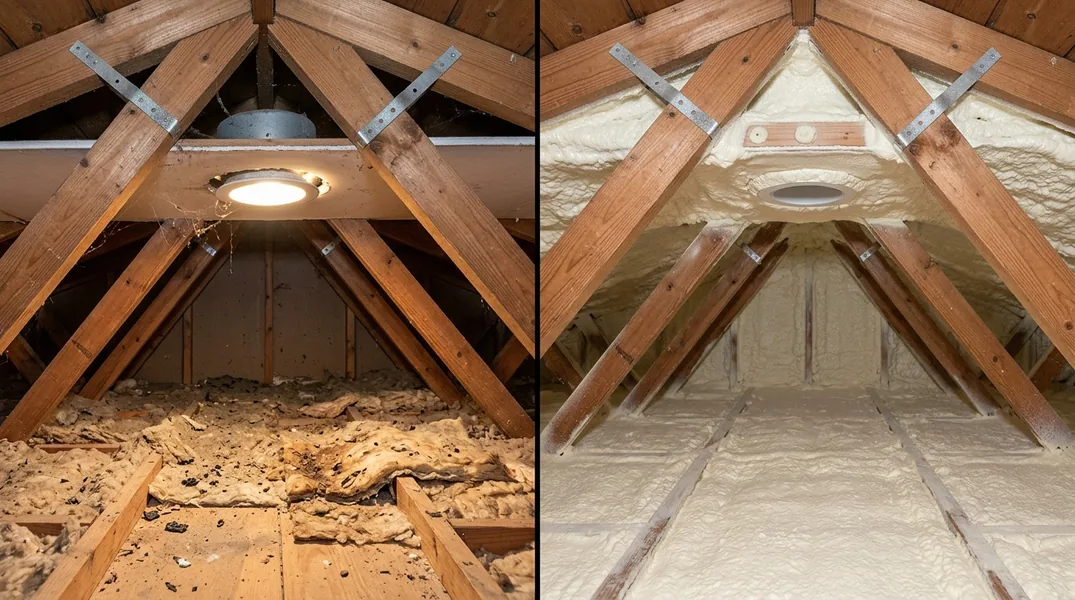
Understanding Spray Foam vs Blown-In Insulation
When homeowners in Miami start researching attic insulation upgrades, they quickly encounter two dominant options: spray foam and blown-in insulation. Both have legitimate strengths, and understanding their core differences is essential before making a decision. The choice isn't always about picking the objectively 'best' product. Instead, it's about matching the right solution to your specific attic condition, budget, and long-term goals.
Attic Spray Foam Insulation creates a continuous thermal barrier by expanding and hardening inside wall cavities and attic spaces. Blown-in insulation, whether fiberglass or cellulose, consists of loose fibers that are mechanically distributed across your attic floor or cavity. Both methods improve energy efficiency, but they work differently and carry different trade-offs in terms of installation, durability, cost, and performance in Miami's hot, humid climate.
Spray Foam vs Fiberglass: The Miami Heat Factor
Miami's subtropical climate presents unique challenges for attic insulation. Summer temperatures regularly exceed 90 degrees Fahrenheit, and your attic can reach 140 degrees or higher without proper ventilation and insulation. Spray foam, particularly Closed Cell Spray Foam Insulation, provides an R-value of approximately 6.5 to 7 per inch, meaning you need less material to achieve the same thermal resistance as fiberglass. More importantly, closed-cell foam creates an air-tight seal that prevents hot air from infiltrating your living spaces and reduces the workload on your air conditioning system.
Fiberglass blown-in insulation typically delivers an R-value of 2.2 to 2.7 per inch, which means you need significantly more depth to match spray foam's performance. In Miami's heat, this matters. Fiberglass also allows air leakage around gaps and seams, meaning your AC unit must work harder to maintain comfort. However, fiberglass is less expensive upfront and doesn't require specialized equipment or insured installers. For homeowners with tight budgets, a quality fiberglass top-up might be the practical answer, even if it's not the premium choice.
Blown-In Insulation vs Cellulose: Which Loose-Fill Works Best
When comparing blown-in insulation options, homeowners often weigh fiberglass against cellulose. Cellulose is made from recycled paper and treated with fire retardants, offering an R-value of approximately 3.2 to 3.6 per inch. It's more environmentally friendly than fiberglass and provides slightly better thermal performance, but it's also heavier, denser, and more prone to settling over time. In Miami's humid environment, cellulose requires careful installation and proper ventilation to prevent moisture absorption and mold growth.
Fiberglass blown-in insulation is lighter, doesn't settle as dramatically, and resists moisture better than cellulose. It's also more widely available and typically less expensive. Both materials, however, share a common weakness in Miami: they don't seal air leaks. If your attic has gaps around ductwork, electrical penetrations, or structural joints, blown-in insulation alone won't stop conditioned air from escaping. This is why many professionals recommend blown-in as a supplementary layer rather than a standalone solution in warm climates.
When a Simple Top-Up Is the Honest Answer
Not every attic needs a complete insulation overhaul. If your current insulation is in good condition but simply insufficient (falling short of the recommended R-38 to R-60 for Miami), a simple top-up with blown-in fiberglass or cellulose may be the most cost-effective and sensible approach. Adding 4 to 6 inches of blown-in material over your existing insulation can meaningfully improve your home's thermal performance without the expense and disruption of removing old insulation and installing spray foam.
Top-ups work best when your existing insulation is dry, undamaged, and not contaminated by pest droppings or mold. If you're uncertain about your attic's condition, a professional energy audit or inspection can reveal whether a top-up will suffice or if more comprehensive work is necessary. Many homeowners in Miami find that honest contractors will recommend a top-up when it's appropriate, even though spray foam generates higher revenue. That transparency builds trust and ensures you're not overpaying for solutions you don't need.
Spray Foam vs Cellulose and Fiberglass: The Long-Term Value Perspective
While Open Cell Spray Foam Insulation and closed-cell options cost more upfront, they often deliver superior long-term value in Miami's climate. Spray foam doesn't settle, doesn't absorb moisture, and maintains its R-value for decades. It also seals air leaks, reduces HVAC strain, and can lower energy bills by 15 to 30 percent depending on your home's condition. For homeowners planning to stay in their property long-term, the return on investment typically justifies the higher initial cost.
Blown-in insulation settles over time, losing 10 to 20 percent of its effectiveness within the first few years. It also requires occasional top-ups and replacement if moisture or pest damage occurs. However, if you're budget-conscious or your insulation needs are modest, the lower upfront cost of blown-in products makes them attractive. The honest answer depends on your timeline, budget, and how long you plan to own your home. A professional contractor can help you weigh these factors and recommend the option that delivers the best value for your situation.
Attic Spray Foam Insulation Cost in Miami: What to Budget
Understanding pricing is crucial when comparing spray foam and blown-in options. Spray foam typically costs between $1.50 and $3.50 per board foot installed, or roughly $3,000 to $8,000 for an average 1,000 to 1,500 square foot attic. Blown-in fiberglass ranges from $0.60 to $1.50 per square foot, translating to $600 to $2,250 for the same space. Cellulose falls in the middle, usually costing $0.80 to $1.80 per square foot. A simple top-up with blown-in material might cost only $300 to $800, making it an attractive option if your existing insulation just needs supplementing.
These figures vary based on attic accessibility, existing conditions, and the specific contractor you choose. Miami Spray Foam Insulation provides transparent estimates tailored to your home's unique needs. Rather than assuming the most expensive option is best, we recommend getting a free estimate and asking directly whether your situation calls for spray foam, blown-in, or a top-up. You can reach us at (786) 503-8206 to discuss your project and receive professional guidance without obligation.
Looking for a professional spray foam insulation contractor in Miami? Miami Spray Foam Insulation responds fast for all your spray foam insulation needs.
Get a Free Quote